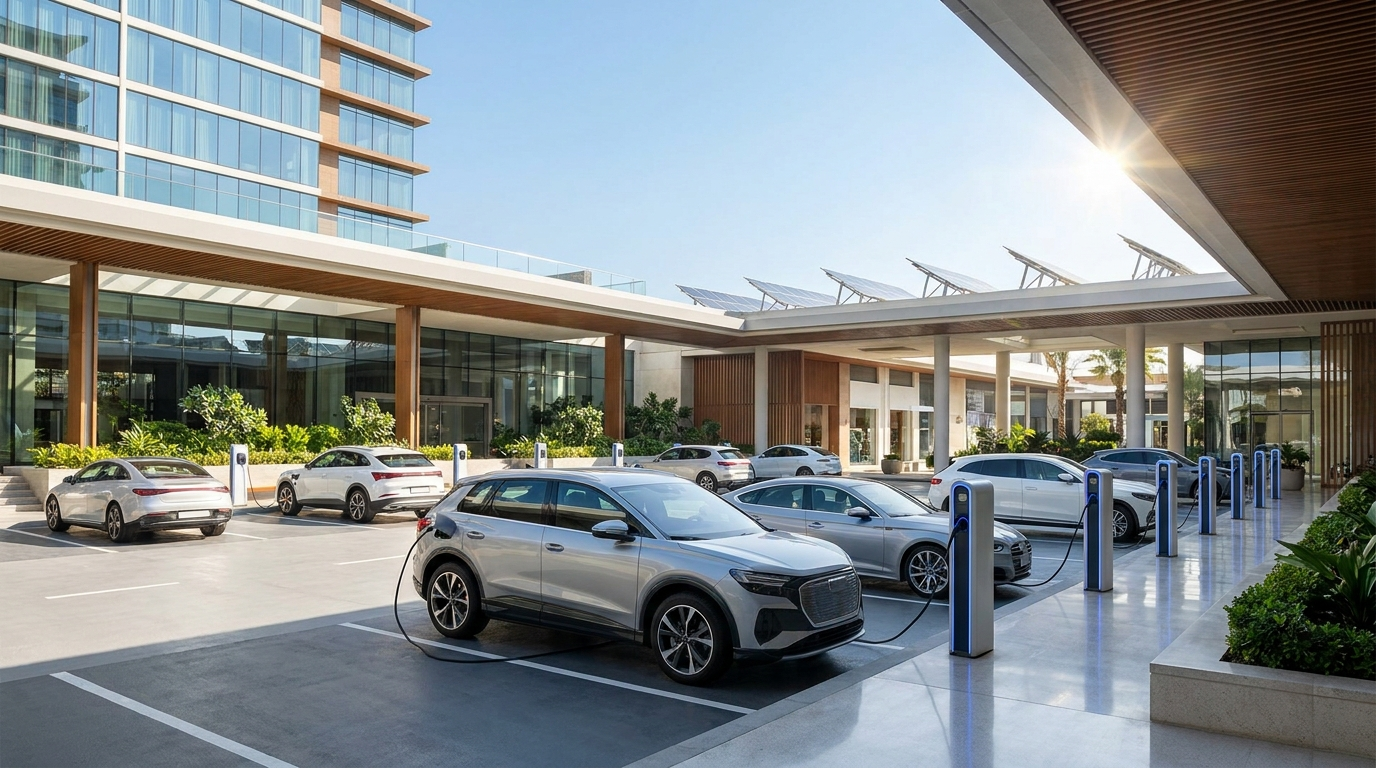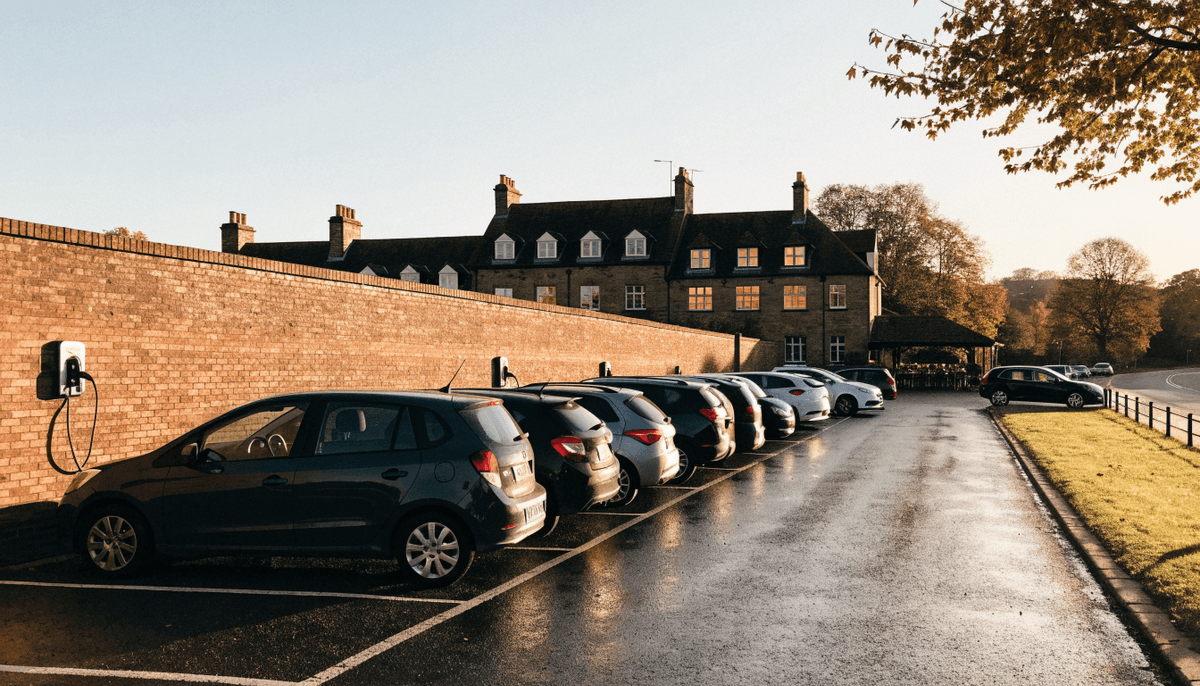
Ultra-rapid chargers grew 39%. Destination chargers grew 4%. That's your opening.
Zapmap's Q3 2026 figures: ultra-rapid chargers up 39.1%, en-route up 23.1% — and destination chargers at hotels, leisure sites and venues up just 4.26%. The slowest-growing part of the network is the biggest opening for any site where people stay a while.
Zapmap published its end-of-September numbers this week, and the headline was cheerful: 124,738 public chargers at 48,298 locations, up 9% on a year ago. Ultra-rapid chargers (150kW and above) grew 39.1% to 15,335. Charging hubs passed 1,070.
Scroll down and one line tells a very different story. Destination chargers — the ones at hotels, shops, leisure sites and anywhere people park for a while — grew 4.26%.
That's the slowest-growing part of the UK network by a distance. And if you run a site where people stay for more than an hour, it's the most useful number in the release.
The split, in plain numbers
Here's Zapmap's Q3 2026 picture by use case, with year-on-year growth:
- En-route (motorway and A-road hubs, fast top-ups): 14,053 chargers, +23.1%
- On-street (residential kerbside): 41,374 chargers, +13.4%
- Destination (retail, hospitality, leisure, longer-stay parking): 64,289 chargers, +4.26%
Work backwards from those growth rates and the gap gets starker. Destination charging added roughly 2,600 chargers in twelve months. En-route added roughly 2,600 too — on a base less than a quarter of the size.
Destination is still the biggest category, at just over half of all public chargers. But it's standing still while the rest of the network sprints.
Meanwhile, Zapmap's Melanie Shufflebotham noted that new EV registrations hit a record of nearly 100,000 in September alone. One month of new EVs. One year of new destination chargers: about 2,600.
Free download
Retail Park Charger P&L
Two 50kW DC chargers, full P&L through year two, tariff strategy, idle fee defence.
Why destination charging is stalling
This isn't a mystery. Follow the money.
Operators chase utilisation. A national charge point operator wants chargers that turn over cars all day at a high price per kWh. Zapmap's August price index had rapid and ultra-rapid pay-as-you-go at 77p/kWh, against 54p/kWh for slower public chargers. A 300kW post at a motorway services fills and empties every half hour. A 7kW post in a hotel car park might serve two cars a day. Investors know which spreadsheet they prefer.
Destination is owner-led. En-route hubs get built because operators fund, build and run them. Destination chargers mostly get built when the site owner decides to — and most site owners haven't. The big leisure-park deals, like RAW Charging's 22-bay hub and 20-year landlord agreements, are the exception, and they go to big landlords with hundreds of bays across dozens of sites. Your 60-space pub car park isn't on anyone's acquisition list.
The easy sites are taken. Plenty of supermarkets and big retail parks already did their charger deals. What's left is the long tail: independent hotels, gyms, golf clubs, holiday parks, sports grounds, garden centres, attractions. Thousands of sites, each one a separate decision, each one waiting for someone to make it.
Why that's an opening, not a warning
The drivers haven't gone anywhere. There are more of them every month — and the ones without a driveway are the ones who need you most.
We covered the per-mile maths last week: rapid-only charging now costs more per mile than petrol, while slower public charging comes in well under. Zapmap's own estimate is that a typical EV driver doing 20% of their charging in public still saves about £1,130 a year against petrol — but that saving shrinks fast if the public 20% is all at 77p.
A driver choosing between a 40-minute stop at a rapid hub and a three-hour charge while they're already eating, training, playing 18 holes or sleeping will take the second option every time — if it exists. Right now, at most sites, it doesn't.
That's the opening. Destination charging is the one part of the network where:
- The competition is thin. At 4% growth, your nearest rival venue probably still has no chargers, or one broken one.
- The hardware is cheap. 7kW and 22kW AC posts cost a fraction of a rapid. No megawatt grid connection, usually no substation.
- The driver's time is free. Nobody resents a three-hour charge when they were staying three hours anyway.
- The real payoff is the visit. The charge is the reason they pick you, stay longer and come back.
We've run the numbers for specific verticals: golf clubs, holiday parks, gyms and hotels, pubs and retail. The pattern is the same every time: long dwell, a car park earning nothing, and customers who'd pay a fair rate to plug in.
How to size it for your site
Skip the brochure. Answer four questions.
1. How long do people actually stay? Pull a week of booking, membership or till data. Match power to dwell time:
- 2–4 hours (restaurant, gym session, round of golf): 7kW per bay adds roughly 50–100 miles
- 1–3 hours with three-phase supply (retail, attractions): 22kW AC, if the cars on your site can take it — many can't charge above 11kW on AC
- Overnight (hotels, holiday parks): 7kW is plenty; don't overspend on speed nobody needs
- Under an hour (cafés, quick retail): this is where a single 50kW DC unit earns its keep
2. Can your supply cope? Six to ten 7kW posts with load management will fit on most commercial supplies. If the DNO comes back with a reinforcement bill and a long wait, read our guide to flexible connections before you accept it.
3. Own or host? Hosting an operator costs you nothing upfront, but they set the price and keep most of the margin, often on a long contract. Owning costs more upfront but you control tariff, access and the customer experience. For a site with modest throughput, owning small AC chargers often beats waiting for an operator who'll never come.
4. Which grant terms apply? The Workplace Charging Scheme pays up to £500 per socket, for up to 40 sockets, until 31 March 2027. For businesses, those chargers are for staff and fleet only — not customers. Charities, public-sector bodies and small accommodation businesses have no such restriction, so a charity leisure trust, a council-run sports centre or a small B&B can open grant-funded chargers to visitors. If you open chargers to the public, the Public Charge Point Regulations 2023 apply — including open-data requirements and contactless payment on new chargers of 8kW and above.
What this doesn't mean
Don't misread the data.
- Rapid hubs are still needed. Long-distance drivers and taxis need speed. The 39% growth there is good news for everyone.
- 4% isn't zero. Destination is still adding chargers — just nowhere near fast enough for the number of EVs arriving. The gap is in pace, not presence.
- A charger nobody can use is worse than none. Buy networked, open-protocol hardware, price it sensibly and fix faults fast. Nearly half of UK EV drivers have been caught out by a broken charger — don't add to the tally.
The bottom line
The UK charging boom is real, but it's a boom in speed. Ultra-rapid grew 39%. En-route grew 23%. The chargers at the places people actually spend their time grew 4%.
That won't fix itself, because the operators funding the boom don't need your car park. Which means, for once, the venues that move first don't have to beat a national network to the spot. They just have to show up.
Nearly 100,000 new EVs were registered last month. Every one of them will need to plug in somewhere it's parked for a while. Make sure that somewhere is you.
Find out what it costs for your site
We check your supply capacity, look at how long your customers and staff actually stay, tell you straight whether owning or hosting makes more sense, and confirm which grant terms apply to your organisation. One visit, a fixed written quote, no obligation.
Energy Partners
Energy Partners — commercial energy specialists for UK businesses.