Your grid connection quote says three years. Cobham just showed there's a faster door.
GRIDSERVE's new 24-bay Cobham hub runs on a flexible grid connection that throttles itself in under 60 seconds when the network is tight. That's the route to beating a three-year reinforcement quote.
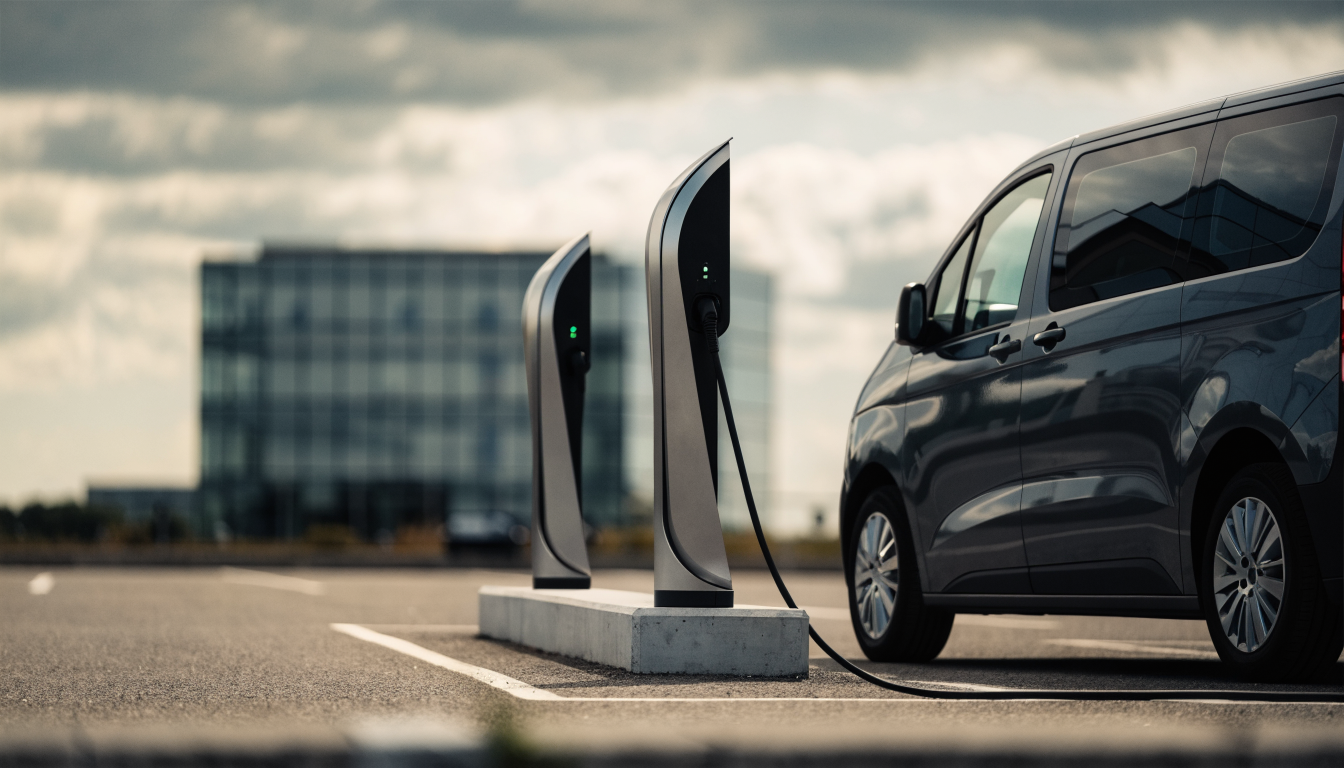
GRIDSERVE switched on 24 ultra-rapid bays at Extra's Cobham Services last week — 400kW-capable chargers at junctions 9–10 of the M25, the UK's busiest motorway service area at roughly 5.5 million visitors a year. That's not the interesting part. Cobham has had chargers for years.
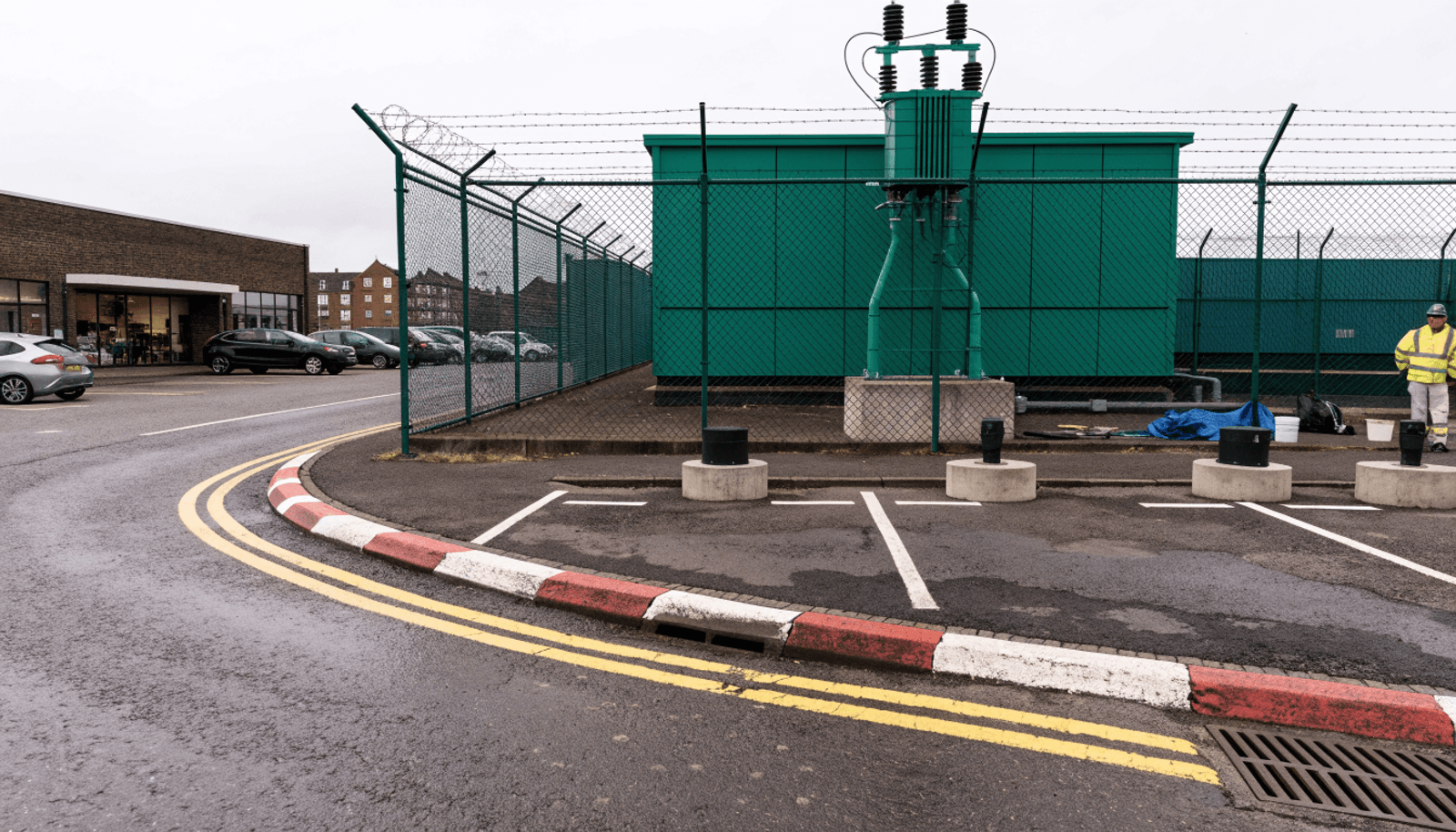
The interesting part is how the new hub is plugged into the grid. It's the first major UK charging hub running on a flexible demand connection managed live by UK Power Networks' Distributed Energy Resources Management System (DERMS) — and it's connected through an independent network operator, ESP, rather than directly to the DNO. When the local network has spare capacity, the hub takes it. When it doesn't, the system turns the hub's power down automatically, in under 60 seconds, and back up when headroom returns.
GRIDSERVE's CEO, Daniel Kunkel, put the commercial point plainly: "By enabling smarter use of available grid capacity, we're able to connect sites more quickly and more cost-effectively."
If you've ever had a connection offer come back with a reinforcement bill and an energisation date three years out, that's the only sentence in the press release you need.
The problem flexible connections solve
Most commercial charging projects don't die at the hardware stage. They die the day the connection offer lands. We've covered why the grid question is the one your installer hopes you won't ask — here's the mechanism behind it.
A traditional firm connection means the network guarantees your full capacity every minute of every day. To honour that, the DNO sizes for your worst-case peak landing on the network's worst-case moment — typically a cold weekday evening. If the local substation can't cover that collision, the network needs reinforcing: new cables, bigger transformers, planning, and a place in the queue.
But almost no charging site needs its full capacity every minute of the year. A depot charges overnight when the network is quiet. A gym car park peaks at 6pm for an hour. Cobham's worst day is a summer Friday, not a January Tuesday. A firm connection makes you pay — in months and money — for a guarantee you'll use for a handful of hours a year.
A flexible (non-firm, or "curtailable") connection flips the deal. You connect to the capacity that exists now, and accept that at the moments the network is genuinely tight, your load gets trimmed.
Free download
Fleet ROI: Diesel vs Electric
14-van diesel vs electric, real cost-per-mile, residual exposure 2026-2030, 5-year cash model.
What's actually changed
Flexible connections aren't new. UK Power Networks alone has connected more than 170,000 generators, and solar farms have taken non-firm terms for a decade. What's changed is that the model now works for demand — for sites that consume power, like yours:
- Curtailable demand connections are allowed. Since 1 April 2023, under Ofgem's Access Significant Code Review, DNOs and IDNOs can offer non-firm connections to demand customers where reinforcement is needed. Curtailment is measured against an agreed curtailment limit; if the network curtails you beyond it, the operator may pay you at a published rate; and the curtailment right normally expires once reinforcement is finished.
- Demand customers stopped paying for upstream reinforcement. The same reform means you no longer pay for network reinforcement upstream of your connection. You still pay for your own connection assets and any sole-use extension, and you still contribute if the project trips the high-cost thresholds. If your last quote pre-dates April 2023, it was priced under the old rules.
- The control tech now works at hub scale. Cobham shows a DNO can manage a flagship rapid hub in real time through an IDNO. That's the piece that turns "non-firm" from a scary word into something an operator can bank.
What hasn't changed: the queue
Don't expect national reform to rescue your project. NESO's connections reform is re-ordering the generation and storage queue — distribution-level Gate 2 Phase 2 offers are scheduled from mid-October 2026 to mid-March 2027. Ofgem's demand-side reform is still at the "consultation this autumn" stage, and the attention is on data centres and large energy users.
None of that fast-tracks a 1MVA charging hub behind a gym. A flexible connection is a door you can knock on now. Reform is something you wait for.
The IDNO angle almost nobody mentions
Cobham went via an IDNO. Independent network operators build or adopt the local network serving your site and connect it to the DNO's — and because they own that asset for decades, they can pay an asset adoption value that offsets part of your contestable works cost.
The best-documented example: Vattenfall's IDNO says its work on a 10-bay hub at Dolbeare Meadow in Devon (1.5MVA, phase one) delivered energisation three years earlier than the original DNO quote and saved the developer more than £1 million. That's one case study from the IDNO's own press office, not a promise — but it's a comparison most installers never bother to run.
Who should take a flexible connection — and who shouldn't
Strong fit:
- Depots charging overnight. Network stress usually bites around the evening peak. If your vans plug in at 7pm and need to be full by 6am, smart-charged fleets barely notice a trim. Pair it with the [Depot Charging Scheme](https://energy-partners.co.uk/insights/depot-charging-scheme-2026-fleet-guide) and the business case gets very short.
- Long-dwell destination sites. Gyms, hotels, leisure parks, golf clubs. If a car is parked for 90 minutes, a 20% power cut for half an hour is invisible to the driver. It's the same dwell-time logic the national operators are now buying car parks for.
- Sites with batteries or solar. On-site battery storage can ride straight through a curtailment window.
- Anyone whose firm offer is dominated by reinforcement cost or a multi-year date.
Weak fit:
- Sites whose revenue depends on full throughput exactly at the network peak — an evening-only rapid hub where every lost kWh is lost margin. Run the numbers before you sign.
- Small users. Sites without current-transformer metering are generally not eligible for curtailable arrangements.
- Dumb hardware. A flexible connection means your chargers must obey a signal, automatically, fast. If your kit can't do open-protocol load management, fix that first — OCPP matters here.
Seven questions before you accept any connection offer
- Is reinforcement driving the cost, the date, or both? If yes, ask the DNO in writing for a curtailable alternative.
- How often will I actually be curtailed? UK Power Networks provides a curtailment report estimating how much of the year a flexible site may be restricted. Get it in hours, by month and time of day — not as a vague percentage.
- What's the curtailment limit, and what's the compensation rate if they go over it?
- When does the curtailment right end? Usually when reinforcement completes — get the date.
- Have I got an IDNO quote? Compare it line by line with the DNO offer, including any adoption value.
- Can my chargers and load manager respond automatically? Cobham's system reacts in under a minute. Manual doesn't count.
- Was my existing quote priced before April 2023? If so, it's worth re-asking under the current rules.
The bottom line
A connection offer with a big reinforcement line and a date years away isn't a verdict. It's an opening position — priced as if your chargers will run flat-out at the worst possible moment, every day, forever. Cobham just proved the country's busiest motorway services doesn't need that guarantee. Your depot or car park almost certainly doesn't either.
And the full cost of a commercial charger is only half-known until the connection is.
Get the firm-vs-flexible comparison in writing
We check your site's connection headroom, request both firm and flexible options, and model the realistic curtailment hours against how your chargers will actually be used — so you know whether a non-firm connection costs you anything at all before you commit. One visit, written comparison, no obligation.
Energy Partners
Energy Partners — commercial energy specialists for UK businesses.