A national operator just dropped 22 charging bays on a leisure park. The site grab has started.
RAW Charging just switched on Wolverhampton's largest ultra-rapid hub — at a bowling-and-cinema leisure park, as part of a £24.5m, 20-year deal. Here's what that means for every venue that isn't Landsec.
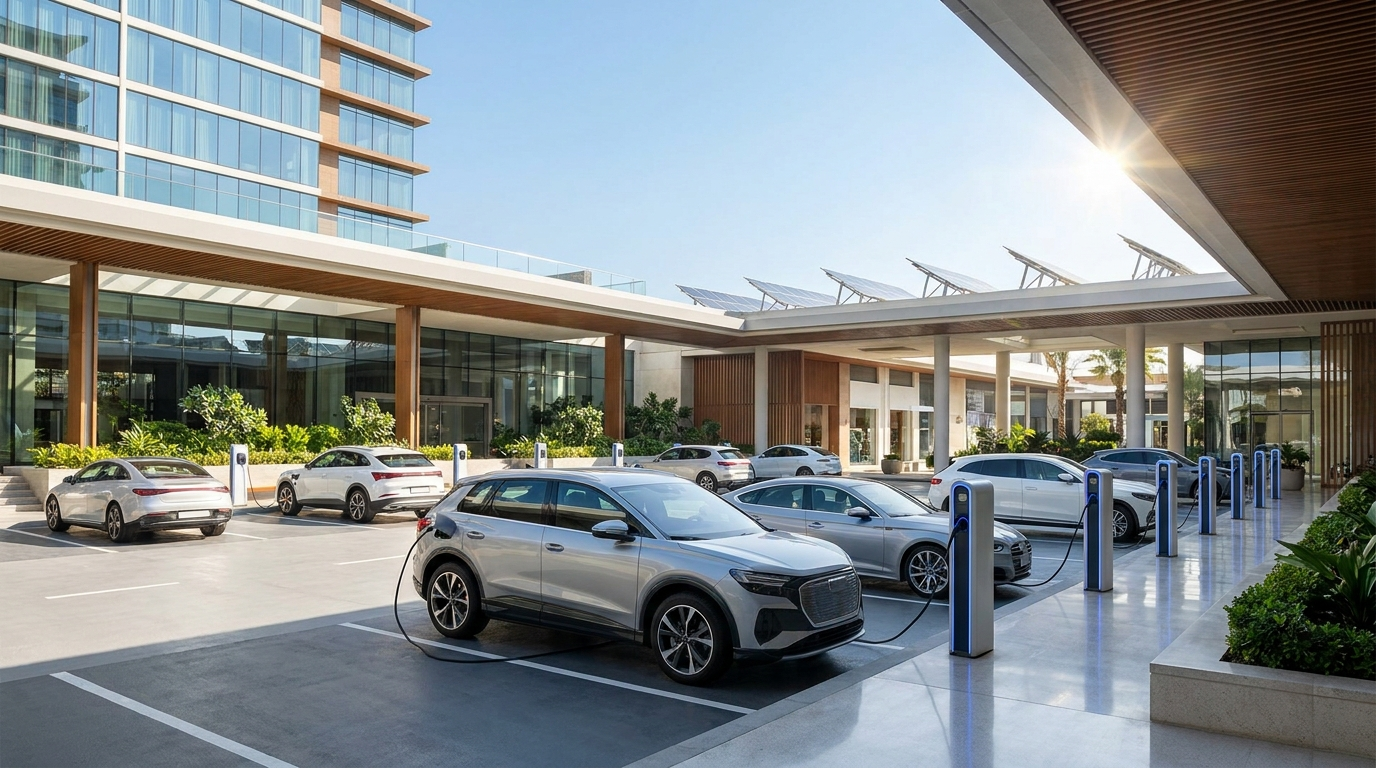
RAW Charging switched on Wolverhampton's largest ultra-rapid EV hub last week — 22 bays at Bentley Bridge Leisure Park, between a Hollywood Bowl, a Cineworld and a row of restaurants. Four AC bays, eighteen DC, sixteen of them ultra-rapid. They gave away free charging on the opening weekend to make sure everyone noticed.
One hub in the West Midlands is not, by itself, news you need to act on. The deal behind it is.
The deal behind the hub
Bentley Bridge is one site in a £24.5 million, 20-year partnership between RAW Charging and Landsec — the property group that owns the park. The agreement covers 1,000 charging bays across 28 UK retail and leisure destinations, and more than 150 of them are already in the ground.
And Landsec isn't RAW's only landlord. The same operator runs a separate £11 million ultra-rapid programme with B&Q (five stores live, up to 28 more planned over the next year), and its host list already includes the National Trust, Merlin Entertainments sites like Alton Towers and LEGOLAND, McArthurGlen outlets and the Royal Horticultural Society. RAW installed over 400 new bays in 2025 alone and says it now powers more than 400,000 electric journeys a year.
Read that list again. Bowling alleys. Theme parks. Gardens. Outlet villages. Not motorway services, not fuel forecourts. The national operators have decided where the next phase of UK charging gets built, and it's places where people park for two hours and spend money — exactly the case we made for hotels, pubs and retail and for gyms and leisure centres.
Free download
Retail Park Charger P&L
Two 50kW DC chargers, full P&L through year two, tariff strategy, idle fee defence.
Why your car park is suddenly interesting
The maths driving this is simple. The UK has passed two million EVs and counting. Public charging passed 121,000 devices in July, but it's concentrated in London and on trunk routes — the everyday places people actually spend their time are still thin.
A leisure venue solves the operator's hardest problem: dwell time. A cinema visit is two to three hours. A gym session is an hour. A family afternoon at a bowling alley is longer. That's a full charge on a 7kW–22kW bay or a guaranteed session on an ultra-rapid, with the car parked somewhere the driver was going anyway. Operators have worked out that the venue's footfall does their utilisation forecasting for them.
Which is why they're now signing 20-year deals to lock those car parks up.
Read the contract, not the press release
Here's the part that matters if you own or run a venue. In a host agreement like Landsec's, the operator typically funds the hardware, the civils and the grid connection, and the landlord gets a rent or revenue share plus a shinier amenity. Zero capex. Sounds like free money.
The trade is control, and the term is the tell: twenty years. For two decades, someone else sets the tariff in your car park, decides the bay count, owns the customer relationship and takes the majority of the charging margin. If EV charging turns out to be a meaningful revenue line for destination venues — and every deal in this article says the operators believe it will be — you've sold it at 2026 prices until 2046.
For a portfolio landlord like Landsec, that's a rational trade: 28 sites electrified with no capital and no operational headache. If that's your position — car parks are not your business, you want the amenity and the rent — a host deal is a perfectly good outcome, and the operators are competing hard enough right now that terms are negotiable.
If you're not Landsec
The uncomfortable bit: the funded-hub offers go to portfolio owners and high-footfall anchors first. If you run an independent leisure park, a gym group, a golf club or a family entertainment centre, the same operators will either not call, or offer you a much thinner revenue share than Landsec got — because your single site carries all the risk of their model with none of the portfolio scale.
That's not a reason to sulk. It's the argument for the other model: own the asset. A self-funded or financed installation means you set the tariff, keep the charging margin, and keep the flexibility to change hardware, pricing and bay count as demand grows. On our numbers, even a modest two-charger destination setup can clear £7,000-plus profit in year two at a well-trafficked site — and unlike a host deal, all of it lands in your P&L.
One honest caveat on grants: the Workplace Charging Scheme's £500-per-socket support applies to bays for your staff and fleet, not customer-facing bays at a commercial venue. Plenty of installers still wave it at leisure operators anyway. Budget customer bays at full cost and treat any grant on the staff side as a bonus.
Three options, one deadline
Every leisure venue in Britain now has the same three choices:
- Do nothing. The retail park up the road gets the hub, the EV-driving families follow the chargers, and their dwell-time spend goes with them. This is now a measurable competitive loss, not a hypothetical one.
- Host. Zero capex, modest income, 15–20-year lock-in, no tariff control. Right answer for some sites — but get the term, the exclusivity clause and the revenue share reviewed before signing, because these agreements outlast most leases.
- Own. Capital or financed, you keep the margin and the control. Needs honest utilisation maths and an early [grid-capacity check with your DNO](https://energy-partners.co.uk/insights/dno-application-ev-charging-uk) — connection headroom, not hardware, is what delays leisure-site installs.
The one thing the RAW–Landsec deal removes is the excuse that destination charging at leisure venues is unproven. A national operator just bet £24.5 million over 20 years that it isn't.
Work out which side of the deal you should be on
We model both routes for venue operators: what a host agreement is really worth over its full term versus what an owned installation returns on your actual footfall, dwell time and grid connection. It's a one-visit site survey and you get the comparison in writing — no obligation, no 20-year small print.
Energy Partners
Energy Partners — commercial energy specialists for UK businesses.