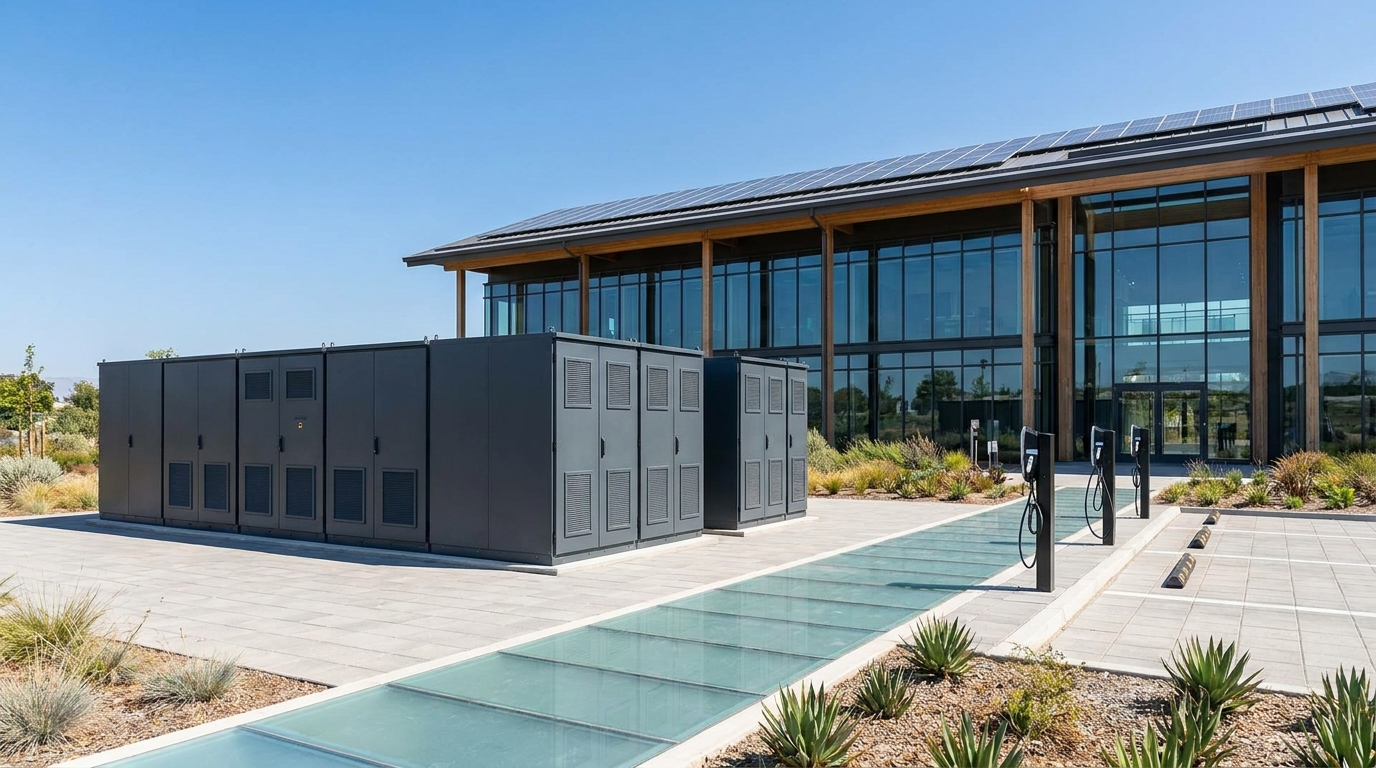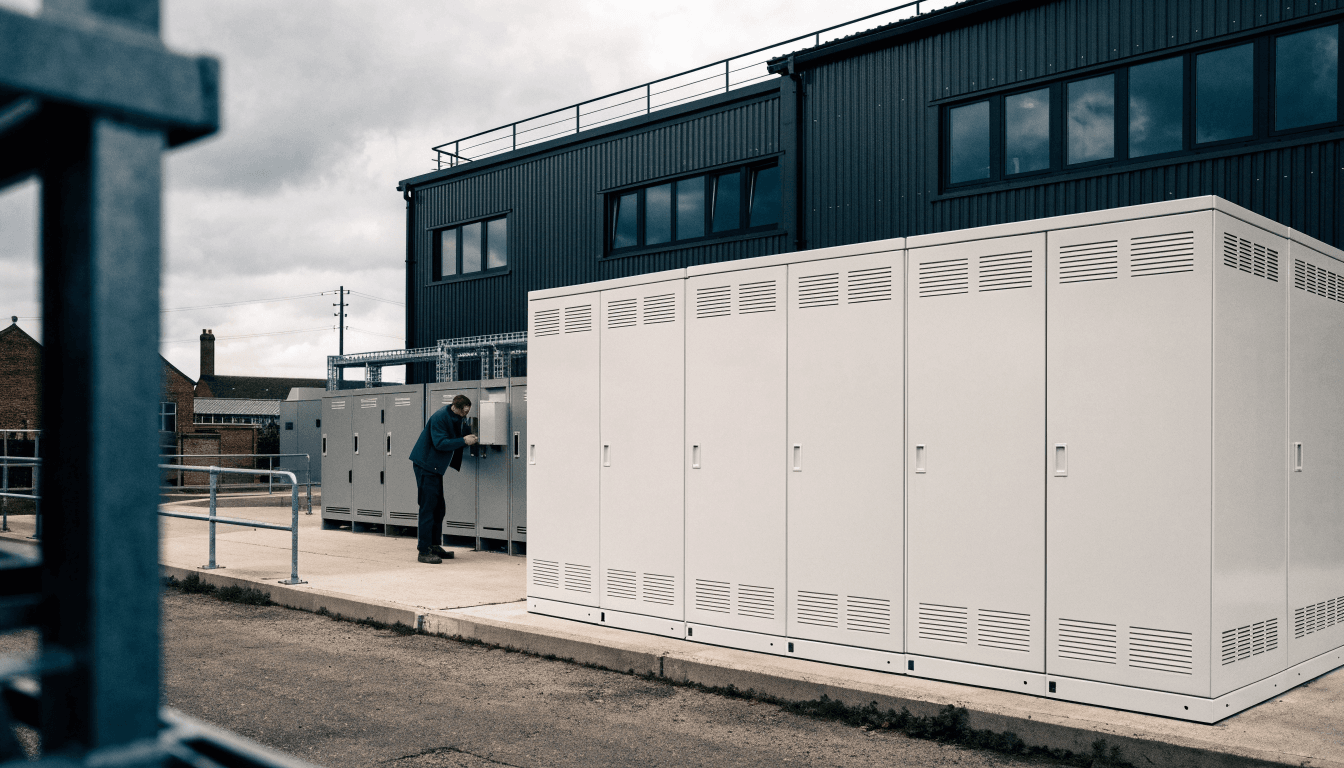
Triad is dead, long live the £30k-a-year battery cheat code
Ofgem killed the Triad scheme in 2022 and most commercial buyers concluded battery storage no longer pays. Most commercial buyers were wrong.
A facilities manager at a 25,000 sq ft warehouse rang us in March. He'd been quoted a 300kWh battery system for £120,000 in 2021, decided to think about it, and is now wondering if he missed the moment. "Wasn't all the savings from Triad? And didn't Ofgem kill Triad?" Both true. Both irrelevant. His battery now earns £38,600 a year on a four-revenue-stack model that didn't exist in 2021. Payback 3.1 years. Ten-year NPV around £190,000 after First Year Allowance tax relief.
The villain here isn't Ofgem, exactly. It's the Targeted Charging Review — the 2022 reform that replaced the Triad scheme with banded DUoS charges and accidentally convinced an entire generation of commercial buyers that batteries no longer make sense. The opposite is true. TCR didn't kill the business case. It restructured it into four stacks, three of which most installers don't even quote on.
Here are the numbers. Then we'll show our work.
What TCR actually did
Until April 2022, large commercial sites could earn substantial revenue by reducing demand during three half-hourly "Triad" periods each winter — typically the coldest weekday evenings between 5pm and 6pm. A 1MW reduction across three Triads could net £40,000+ in transmission charge avoidance. It was, in effect, a £40k/year cheat code if you owned a battery.
Ofgem's TCR replaced this with banded fixed DUoS charges from April 2022, removing the per-kWh variability that made Triad-chasing profitable at the transmission level. Headlines screamed "battery business case dead". Headlines, as ever, were wrong.
Two things TCR did not kill:
- Distribution-level DUoS red bands. Local distribution charges still vary sharply by time of day. Red band rates (typically 4pm-7pm winter weekdays) run 2-8x off-peak rates. A battery that shaves demand during these hours still avoids real money.
- Ancillary services markets. Capacity Market, Dynamic Containment, Firm Frequency Response — these markets have grown, not shrunk. National Grid ESO is paying serious money for distributed flexibility.
The post-TCR battery business case isn't worse. It's just more sophisticated.
Free download
Commercial Battery Storage ROI
300kWh / 150kW system, four revenue stacks post-Triad, payback under 2.5 years on net capex.
The four revenue stacks of a 2026 commercial battery
1. DUoS red-band shaving. For a typical mid-sized commercial site on a half-hourly meter, red-band DUoS sits in the 15-35p/kWh range against off-peak rates of 2-5p/kWh. A 300kWh battery that displaces 250kWh of red-band consumption five days a week for the 28-week winter banding period saves roughly £18,000-£22,000 a year on DUoS alone. This is your bread and butter.
2. Capacity Market (DCM). The Distributed Capacity Market pays for capacity that can respond when the grid is stressed. Distributed batteries access this through aggregators, typically earning £20-£40 per kW per year for a 15-year contract. A 150kW battery output capacity in a four-year capacity agreement earns around £4,200-£6,000 a year, deposited quarterly. You bid through your aggregator; the auctions run annually.
3. Frequency response. This is the big one nobody talks about. Dynamic Containment (sub-second response to frequency deviations), Dynamic Moderation and Firm Frequency Response pay batteries to sit on standby and react when grid frequency drifts from 50Hz. Typical commercial batteries earn £40-£90 per kW per year, paid monthly by the aggregator. Our 150kW battery example earns around £9,000-£13,500 a year here.
4. Solar self-consumption uplift. If you already have solar PV, a battery dramatically increases the proportion of your generation you actually use on-site. Typical self-consumption rates without battery sit at 55-65%. With a properly-sized battery, this rises to 85-90%. For a 150kWp solar array generating 135,000kWh annually with a 27p/kWh import-displaced value, lifting self-consumption from 60% to 88% releases another £6,000-£11,000 a year.
That's four stacks. Most quotes show you one.
A worked example, because that's what you actually wanted
Site: 25,000 sq ft single-occupier warehouse, Midlands, half-hourly metered, 800kVA supply, existing 150kWp rooftop solar (installed 2022), ~£280,000 annual electricity spend.
System: 300kWh / 150kW lithium-ion battery, behind-the-meter, integrated with existing solar inverter, aggregator-managed for ancillary services. Ten-year manufacturer warranty.
Capex breakdown:
- Battery cabinet + BMS + inverter: £82,000
- Installation, switchgear, civils, commissioning: £28,000
- Aggregator integration, monitoring, SCADA: £6,000
- DNO G99 application and site works: £4,000
- Total capex: £120,000
FYA tax relief on full capex at 25% CT: £30,000
Net capex post-tax: £90,000
Annual revenue/savings stack (year one):
- DUoS red-band shaving: £18,400
- Capacity Market (DCM): £4,200
- Frequency response (DC/FFR via aggregator): £9,800
- Solar self-consumption uplift (60% → 88%): £6,200
- Total annual: £38,600
Payback (net of FYA): 90,000 ÷ 38,600 = 2.33 years Payback (gross capex): 120,000 ÷ 38,600 = 3.11 years 10-year cumulative cash (with 2% degradation, 3% inflation on revenue): ~£430,000 10-year NPV at 8% discount, post-FYA: ~£190,000
That's a 158% return on net capex over the battery's first warranted decade. The villain didn't kill the case. The villain just made it harder to explain in one sentence.
What your aggregator contract should include
Half the battery deals we see get the hardware right and the contract wrong. The aggregator agreement is where the revenue stacks live or die. Demand these five points:
- Revenue stacking, not selection. The aggregator must be able to switch between DUoS-shave mode, DC/FFR availability and DCM dispatch automatically. Some contracts lock you into one service. Walk away from those.
- Performance fee, not flat fee. Pay the aggregator a percentage of revenue generated (typically 15-25%), not a fixed monthly charge that survives a bad year.
- Battery cycling caps. Frequency response is shallow-cycle and battery-kind. Some DUoS shaving regimes are aggressive and shorten warranty. Cap daily energy throughput.
- Transparent revenue reporting. Monthly statements with revenue per service stack, dispatch hours, and benchmarking against the aggregator's portfolio.
- Exit clause at 36 months. The market is moving fast. Don't lock into a 10-year aggregator contract — your battery has a 10-year warranty but the optimal way to monetise it will change three times in that window.
When battery doesn't pay
We'll be honest, because nobody else is. Battery storage doesn't pay if:
- Your site is on a non-half-hourly meter with no red-band exposure (most sites under 100kVA).
- Your annual electricity bill is under £40,000, in which case the revenue stacks are too thin to clear the capex.
- You have no solar and your load profile is already flat — you're chasing two of the four stacks at best.
- Your DNO won't grant a G99 export-capable connection, which restricts ancillary service participation.
If three or more of those apply, the maths doesn't work. We'll tell you that on the site survey. Nobody else does.
The short version
TCR killed Triad but didn't kill battery. A 300kWh commercial battery in 2026 earns from four stacks: DUoS red-band shaving (~£18k/yr), Capacity Market (~£4k/yr), frequency response (~£10k/yr), and solar self-consumption uplift (~£6k/yr). Net annual stack around £38,600. Capex £120k, post-FYA £90k. Payback under 2.5 years on net capex, NPV ~£190k over 10 years. Plus a 100% FYA on the kit (HMRC plant and machinery rules). The case is stronger now than under Triad — it's just harder to fit on a one-page brochure.
Want us to do the maths on your site?
Book a site survey at /site-survey. We'll pull your half-hourly data, model all four revenue stacks against your actual load profile, and tell you the honest payback. Including the bit about whether your DNO will play ball with a G99 export-capable connection. (Especially the bit about your DNO.)
Energy Partners
Energy Partners — commercial energy specialists for UK businesses.