Your business electricity bill is now 60% fees, 40% electricity. The grid is the new villain.
You negotiated a great wholesale rate. You feel clever. Then you read your bill: 60% of it is fees you can't negotiate, on infrastructure you don't use, at a region-specific rate you can't change. The good news: there's a way to claw a third of it back.
Open last month's electricity bill. Find the kWh price you negotiated so hard for. Now find every other number on the bill — TNUoS, DUoS, BSUoS, CfD, RO, capacity market, climate change levy, VAT — and add them up.
That second number is now bigger than the first. By 2026, non-commodity charges account for roughly 60% of a typical UK business electricity bill. Your "great rate" on energy isn't a great rate on your bill. It's a great rate on 40% of your bill. The other 60% is what the network charges you for the privilege of having electricity delivered, regardless of what you negotiated for the electrons themselves.
This isn't a quirk. It's the new structural reality. And from 1 April 2026, it got worse — standing charges climbed significantly, and the DUoS red-band rate (the time-of-use charge for peak hours) climbed harder.
What's actually on your bill
For a half-hourly metered business site, your electricity bill typically breaks down like this:
- Wholesale electricity — what you actually used, at the rate you contracted: ~40%
- TNUoS (Transmission Network Use of System) — paying for the high-voltage grid: ~12%
- DUoS (Distribution Network Use of System) — paying for your local network: ~18%
- BSUoS (Balancing Services Use of System) — paying National Grid to keep the grid stable: ~5%
- Levies (CfD, Renewables Obligation, Feed-in Tariff legacy): ~10%
- Capacity Market charge — paying for security of supply: ~3%
- CCL (Climate Change Levy) and VAT: variable
Your supplier negotiated the first 40%. Everything else is set by Ofgem, National Grid, your DNO and HMRC — none of whom take phone calls from your finance director.
Free download
Commercial Battery Storage ROI
300kWh / 150kW system, four revenue stacks post-Triad, payback under 2.5 years on net capex.
The two levers you actually have
You cannot negotiate non-commodity charges. You can, however, reduce what you owe in them. There are exactly two ways:
Lever 1 — Reduce your peak kW demand. TNUoS (under the post-Triad regime) and DUoS standing charges both scale with your peak capacity. Reduce your maximum power draw by 100kW and you can claw back £5,000–£30,000 per year in network charges alone, depending on your DNO region (and they vary by 20–40%).
Lever 2 — Shift consumption out of red-band hours. DUoS red-band is roughly 7am–11am and 4pm–7pm on weekdays, depending on your region. The cost per kWh in red-band can be 3–5 times the green-band rate. Move half your consumption out of red-band and the savings compound fast.
Both levers point at the same hardware solution.
How solar + battery + smart energy plan turn both levers at once
This isn't a sales pitch dressed as analysis. It's the only mechanism that hits both levers simultaneously:
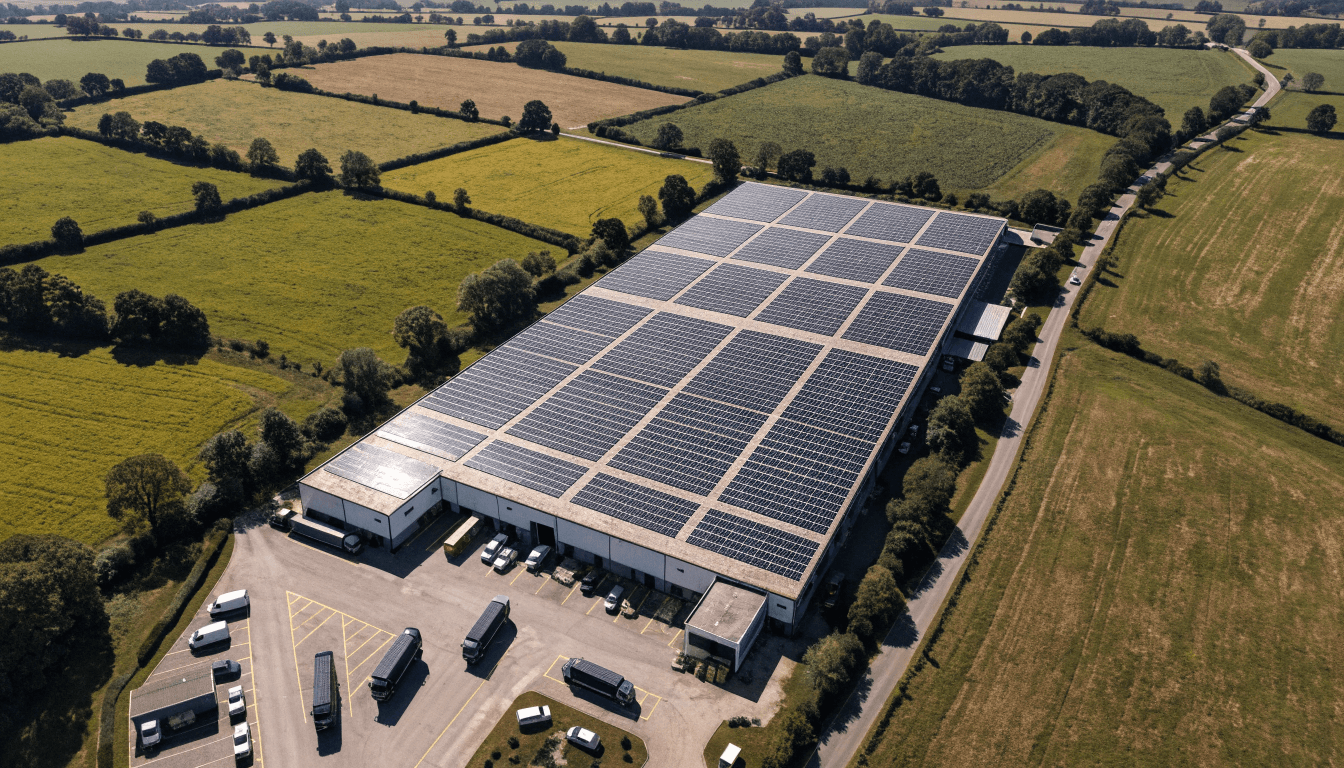
- Solar reduces your grid-imported peak when the sun is up (lever 1)
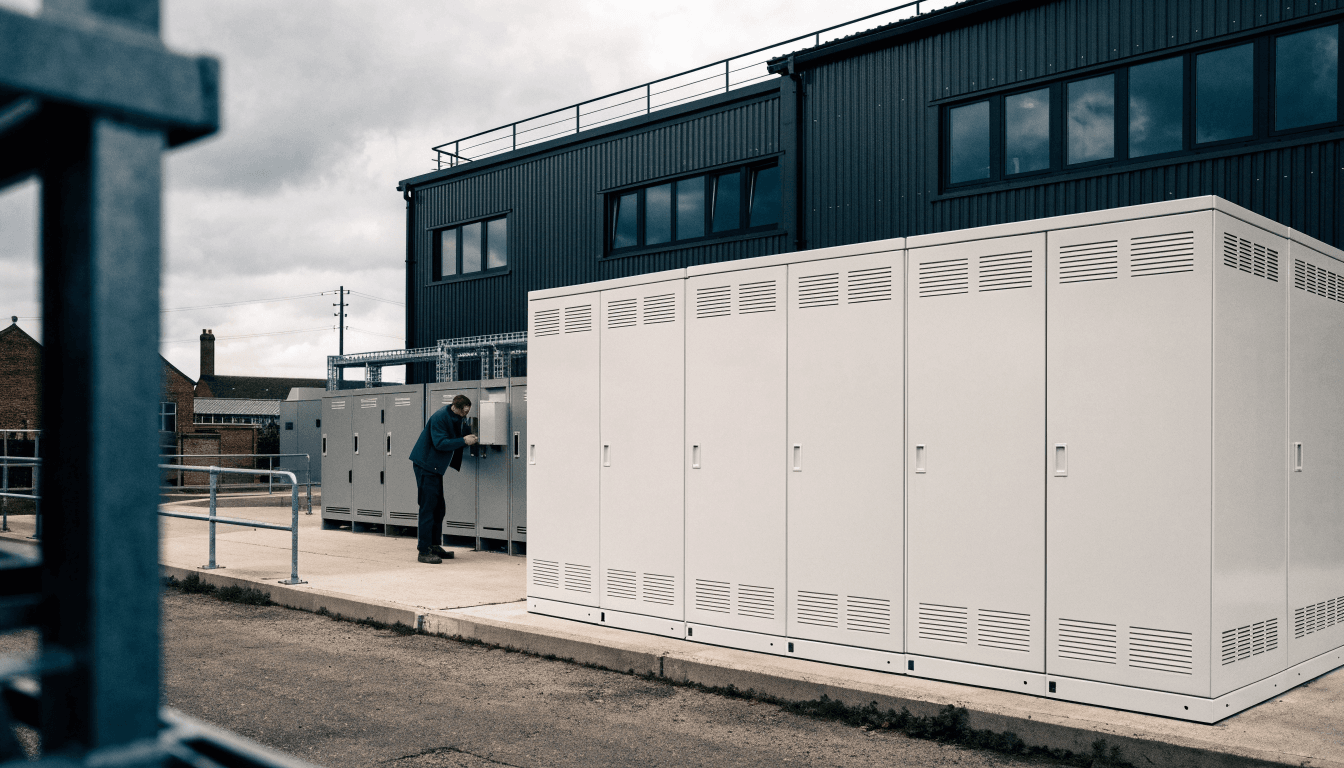
- Battery storage lets you draw cheap green-band electricity, store it, and discharge during red-band (lever 2)
- Battery storage also clips your peak demand spike when high-draw equipment kicks in (lever 1 again)
- Smart energy software automates the dispatch — your facilities manager doesn't have to do anything
A typical UK industrial site with a 300kW peak demand, daytime operation, and DUoS red-band exposure can expect:
- £15,000–£40,000/year in DUoS savings from peak shaving and red-band avoidance
- £20,000–£60,000/year in wholesale electricity savings via solar self-consumption
- £6,000–£15,000/year in revenue from grid-services participation (Dynamic Containment, Demand Response)
- 5–7 year payback on the combined system, with capital allowances available
A mini-case
Mid-size logistics warehouse, Yorkshire, 400kW peak, runs 6am–8pm Mon–Fri.
Installed: 250kWp roof solar + 200kWh / 100kW battery + smart energy management
Capex: ~£280,000
Year 1 wholesale savings: £42,000
Year 1 DUoS savings (peak shaving + red-band avoidance): £18,500
Year 1 grid services revenue: £8,000
Total Year 1 benefit: £68,500
Payback: ~4.1 years
The bit that surprises finance directors: the DUoS savings alone — money clawed back from charges they can't negotiate — usually exceed the wholesale savings within three years, because grid charges keep rising.
What to do this week
If you're half-hourly metered, ask your supplier for 12 months of HH consumption data. It's free. They have to provide it. Send that data to a competent integrator (us, or someone who actually models DUoS), and you'll get a modelled saving in under 10 working days.
If your supplier resists, switch suppliers. They're not in the cost-control business; they're in the wholesale-margin business.
The short version
Your electricity bill is 60% non-commodity charges. You cannot negotiate them. You can reduce them by cutting peak demand and shifting consumption out of red-band — both of which solar + battery + smart software do automatically. Payback is 4–6 years on most commercial sites, and DUoS keeps climbing.
Send us your HH data. Calculate your battery ROI or model solar payback. We'll come back inside 10 working days with a modelled saving number you can take to the board.
Energy Partners
Energy Partners — commercial energy specialists for UK businesses.