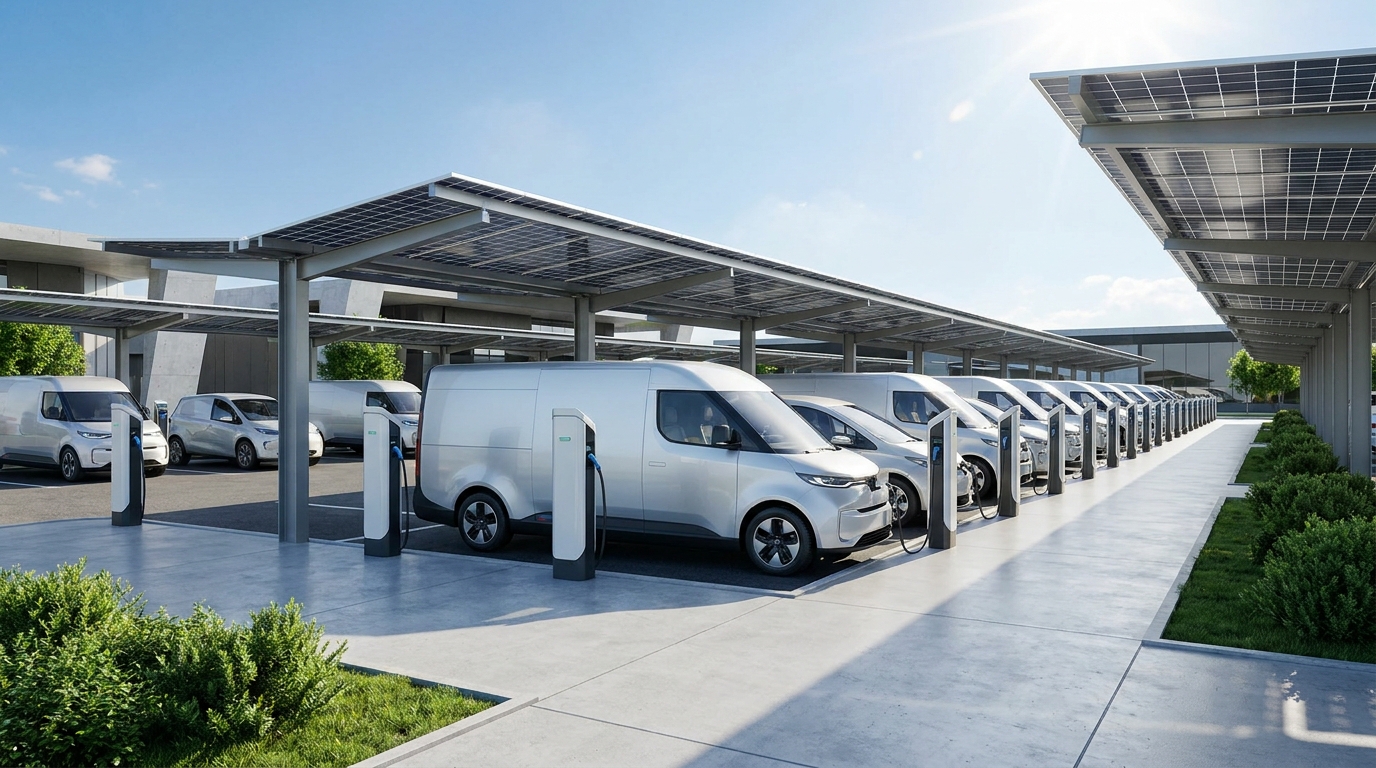
Electrifying a fleet looks expensive on the sticker price and cheap over its lifetime. The 2026 numbers — low running costs, minimal company-car tax and grant-funded charging — make the total-cost-of-ownership case stronger than ever.
Why sticker price is the wrong lens
Electric vans and cars cost more up front, but fleets run on total cost of ownership (TCO) — and across fuel, maintenance, tax and charging, EVs increasingly win. Here's how the pieces add up in 2026.
1. Fuel: the biggest saving
Charging — especially overnight at a depot or from on-site solar — is far cheaper per mile than diesel. For high-mileage fleets, this is where most of the saving lives.
2. Maintenance
EVs have far fewer moving parts than diesel vehicles — no oil changes, fewer wearing components — which typically means lower servicing costs and downtime over the life of the vehicle.
3. Company-car tax (BIK)
For cars, the Benefit-in-Kind rate on fully electric vehicles is just 4% in 2026/27, rising slowly to 5% (2027/28), 7%, then 9% — where it's capped, and the structure is protected through to 2030. Compared with petrol/diesel rates, that makes EVs a powerful salary-sacrifice and company-car benefit.
4. Grant-funded charging
The charging infrastructure — often the part fleets worry about — is heavily grant-supported:
- Depot Charging Scheme: up to 70% of chargepoint and civil costs (up to £1m) — but the first window closes 30 June 2026. (See our depot scheme guide.)
- Workplace Charging Scheme: 75% up to £500/socket for staff and lighter fleet charging. (See our WCS guide.)
A sensible roadmap
- Audit duty cycles — understand mileage, routes and dwell time to size charging.
- Install depot/workplace charging — capture the grants while they're open.
- Electrify in phases — replace vehicles as they cycle out, starting with the best-fit routes.
Frequently asked questions
Is an electric fleet cheaper than diesel? Usually on total cost of ownership — lower fuel and maintenance, very low company-car tax, and grant-funded charging often outweigh the higher purchase price, especially at high mileage.
What's the company-car tax on an EV in 2026? The BIK rate for fully electric cars is 4% in 2026/27, rising gradually to a 9% cap and protected to 2030 — far below petrol and diesel.
How is fleet charging funded? The Depot Charging Scheme (up to 70% / £1m, first window closes 30 June 2026) and the Workplace Charging Scheme (75%, up to £500/socket).
The bottom line
Look past the sticker price: in 2026, low running costs, minimal BIK and grant-funded charging make fleet electrification a strong TCO decision — and the depot grant window is closing fast.
Tax and grant figures verified against public guidance as of June 2026; confirm current details before acting. Not tax advice.
Fleet AuditRead this article in the app at energy-partners.co.uk/insights/ev-fleet-electrification-tco-2026. Energy Partners installs and manages commercial EV charging, solar and battery storage for UK venues — talk to us.