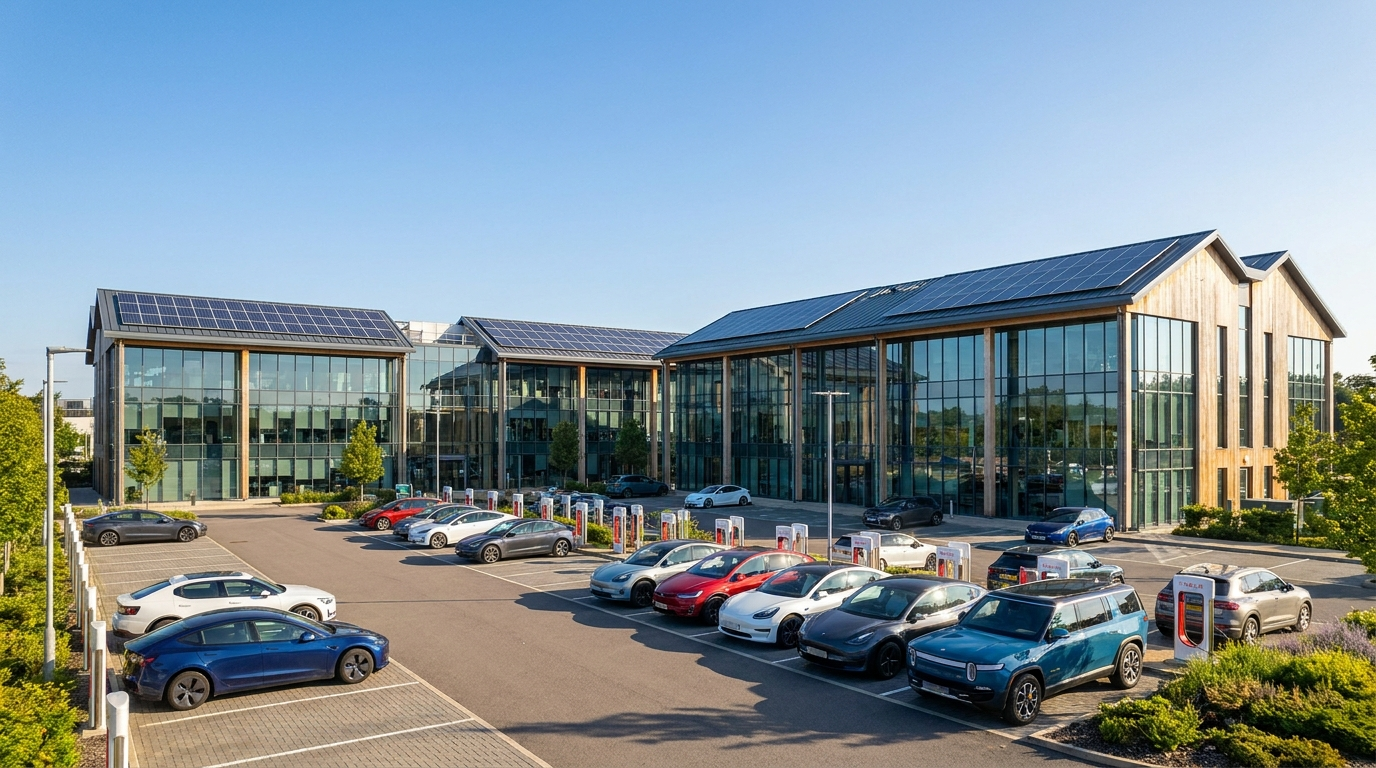
Three forces have lined up in 2026: generous grants in their final year, strong tax relief, and energy prices that punish standing still. Here's the case for acting now.
Why 2026 specifically
Electrifying a business — charging, solar, storage — has always made long-term sense. What's changed is that several incentives and pressures now point the same way at once:
1. Grants are in their final year
The government's EV-charging grants have been extended for a final year to 31 March 2027, and the Workplace Charging Scheme rate actually rose to £500 per socket. After this window, this funding route closes. (Our full grants guide lists every open scheme.)
2. Tax relief is strong
The Annual Investment Allowance lets most businesses write off 100% of solar and battery investment (up to £1m) in year one — effectively a quarter off at the 25% corporation-tax rate. (See our solar and battery guides.)
3. Energy prices punish standing still
With non-domestic power volatile and often 30–45p/kWh, generating and storing your own — and charging vehicles off-peak — is a hedge, not just a green gesture.
4. Expectations are rising
Staff expect workplace charging, customers choose EV-ready venues, and tenants and procurement teams increasingly require sustainability credentials.
What "going electric" actually looks like
It's rarely one project. Most businesses combine: solar to generate, storage to shift load, and EV charging for staff, fleet or customers — ideally designed as one plan so the parts reinforce each other and the funding stacks.
The risk of waiting
Grant budgets are finite and the schemes close in 2027. Waiting means paying full price for charging, missing a year of energy savings, and falling behind on expectations competitors are already meeting.
→ See what your site qualifies for in 60 seconds
FAQ
Why electrify a business in 2026? EV-charging grants are in their final year (to 31 March 2027), tax relief on solar and storage is strong, energy prices are volatile, and staff/customer expectations are rising — a rare alignment of reasons to act.
What's the financial upside? Grant funding on charging, ~25% effective tax relief on solar and storage via the Annual Investment Allowance, lower energy bills, and protection against price volatility.
The bottom line
2026 is an unusually good year to electrify: the incentives are generous but time-limited, and the cost of doing nothing is rising. The fastest first step is to see what your site qualifies for.
Grant and tax figures verified against public guidance as of June 2026; confirm current details before acting. Not tax advice.
Grant Eligibility CheckerRead this article in the app at energy-partners.co.uk/insights/business-case-going-electric-2026. Energy Partners installs and manages commercial EV charging, solar and battery storage for UK venues — talk to us.